Pop-Top vs. High-Top Roofs: A UK Guide to Upgrading Your Campervan for More Space & Comfort

Founder of CamperBrain, builder of its UK converter directory and conversion-cost data.
Pop-Top vs. High-Top Roofs: A UK Guide to Upgrading Your Campervan for More Space & Comfort
Love your pop-top camper but find yourself dreaming of more space and year-round comfort? You’re not alone. The pop-top is a brilliant entry into van life, but as your adventures get longer and the British weather makes its presence felt, its limitations can start to show. We break down the pros and cons of upgrading to a high-top for UK adventures, helping you decide if it's the right move for your family, your travels, or your retirement plans.
Have You Outgrown Your Pop-Top?
The pop-top camper is a UK icon for good reason. It’s the perfect blend of weekday workhorse and weekend escape artist, slipping under 2-metre car park barriers and maintaining a discreet profile. When you first bought it, the ability to raise the roof for extra sleeping space or headroom felt like a revelation. It was the key that unlocked countless adventures.
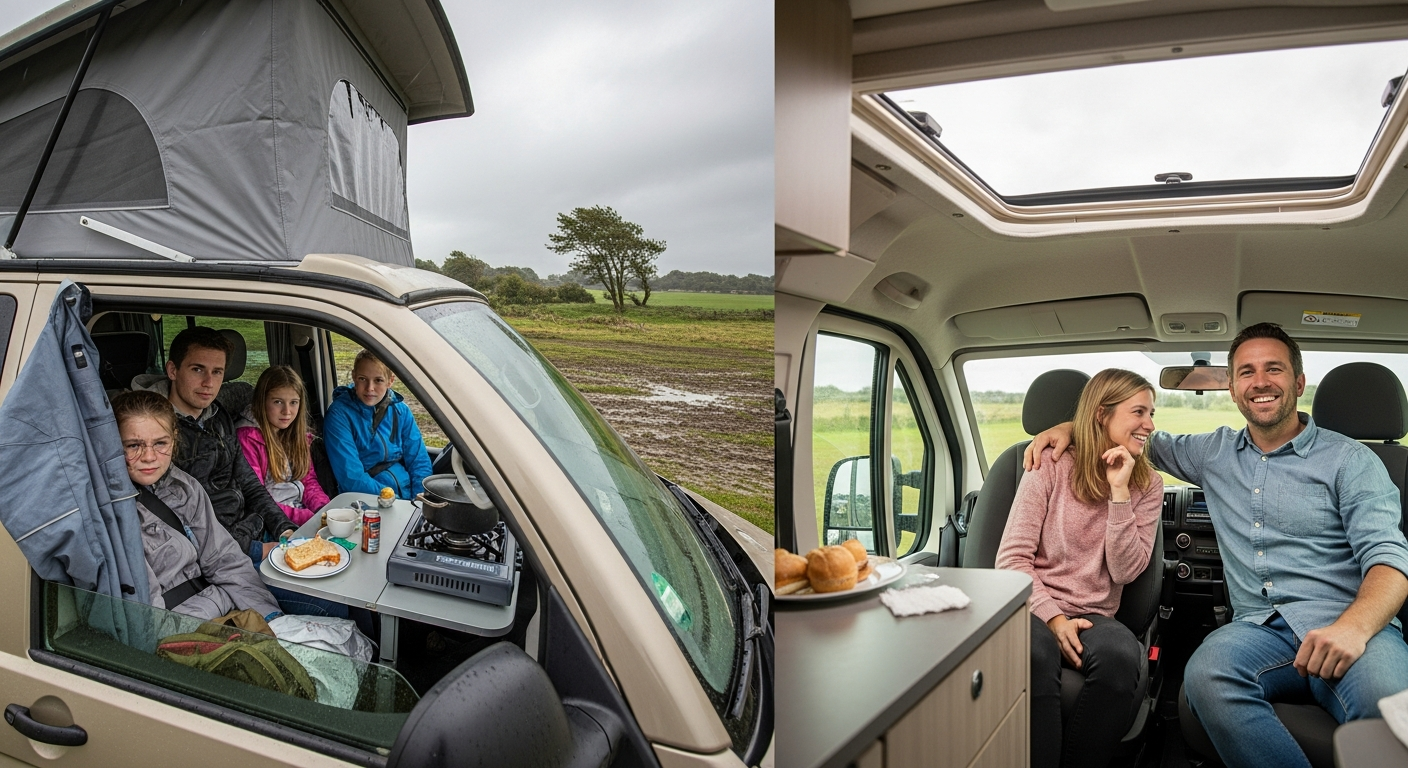
But now, things might be feeling a little… cramped. Perhaps the kids are getting bigger and the rainy days in the Lake District feel longer than they used to. Maybe you’re tired of the nightly routine of converting seats to beds, or the sound of canvas flapping in a coastal gale is losing its romantic charm. That feeling of ‘hitting the ceiling’—both literally and figuratively—is a common milestone in the campervan journey.
This isn't about regretting your pop-top. It's about recognising that your needs have evolved. You're looking for more than just a weekend base; you're seeking a more permanent, comfortable, and capable home-on-wheels. This guide is for you, exploring whether a permanent high-top roof is the logical next step for your UK adventures.
The High-Top Advantage: More Than Just Headroom
Upgrading to a high-top campervan is a significant change, but the benefits it brings can fundamentally transform your travel experience. It’s about gaining a whole new dimension of space, comfort, and usability, especially for the unique demands of UK touring.
The most immediate and game-changing benefit is the gift of full standing height. Being able to stand up straight to change your clothes, cook a meal, or simply stretch in the morning is a luxury you’ll never take for granted again. This permanent headroom makes your van feel less like a clever tent and more like a genuine micro-apartment.
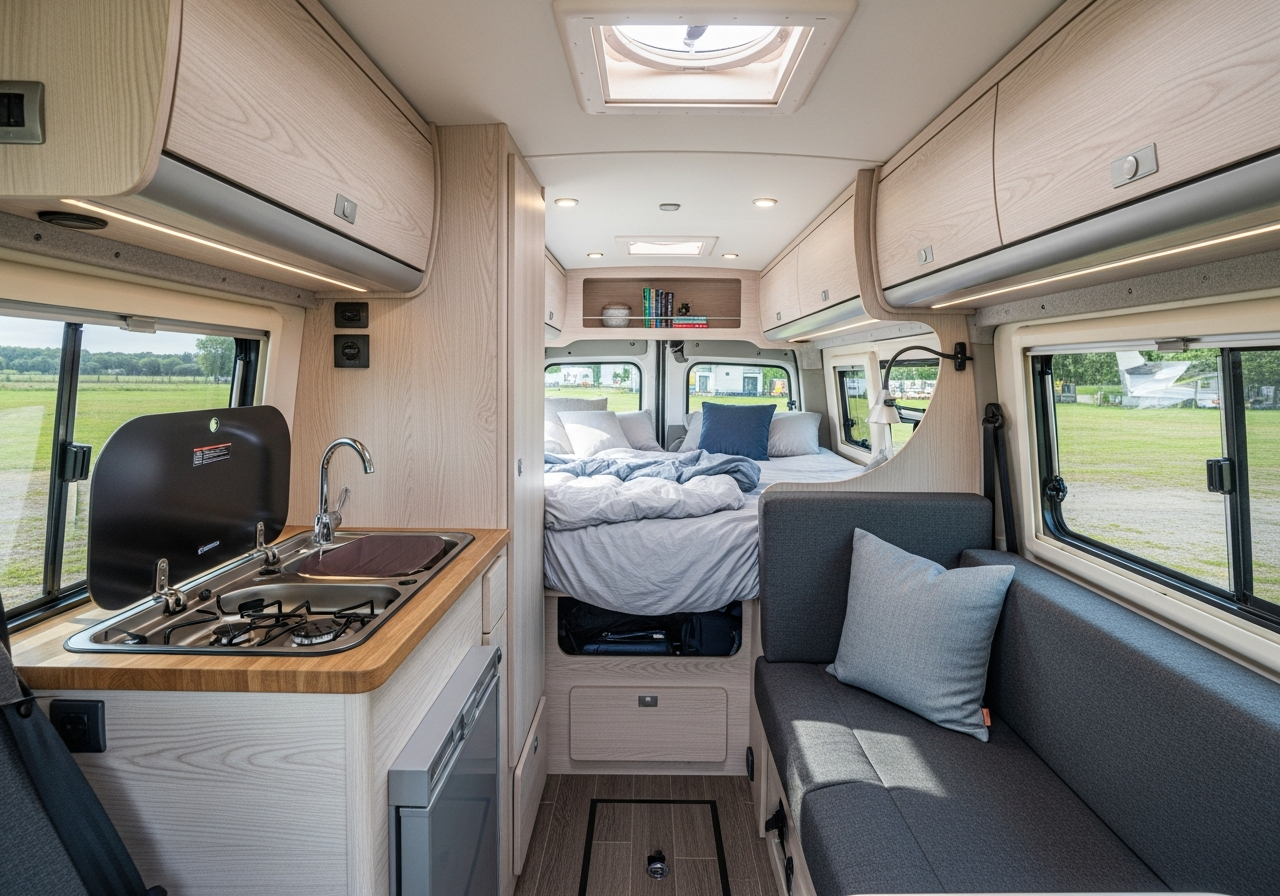
For those who don't want to hang up their keys when autumn arrives, a high-top is the superior choice. Unlike the fabric sides of a pop-top, a solid, insulated roof provides a robust thermal barrier against the cold. This means a warmer, cosier living space, significantly less condensation to battle on frosty mornings, and lower heating bills. It turns your van into a true all-weather warrior, ready for anything the British seasons can throw at it.
This newfound vertical space also revolutionises your layout possibilities. Suddenly, your floor plan isn't dictated by the need to raise and lower a roof. You can install permanent overhead lockers that offer vast amounts of storage, keeping your living space clear and organised. It opens the door to more ambitious designs, like a fixed rear bed that’s always ready for you after a long day's hike, or even a dedicated internal shower and toilet cubicle—a true game-changer for long-term travel.
"high top wins for serious camping , warmer, quieter, more storage and no having to move everything everytime you move."
Finally, there’s the sheer security and peace of mind. In a storm, the difference between listening to rain patter on a solid, insulated roof versus hearing it lash against a canvas pop-top is immense. A high-top is quieter, more secure, and offers a greater sense of permanence and safety when you’re parked up for the night.
Pop-Top vs. High-Top Campervan: A Detailed UK Comparison
Deciding between sticking with your pop-top or upgrading to a high-top involves weighing up the practicalities of daily use against the comforts of life on the road. Here’s how they stack up in a head-to-head comparison for UK van owners.
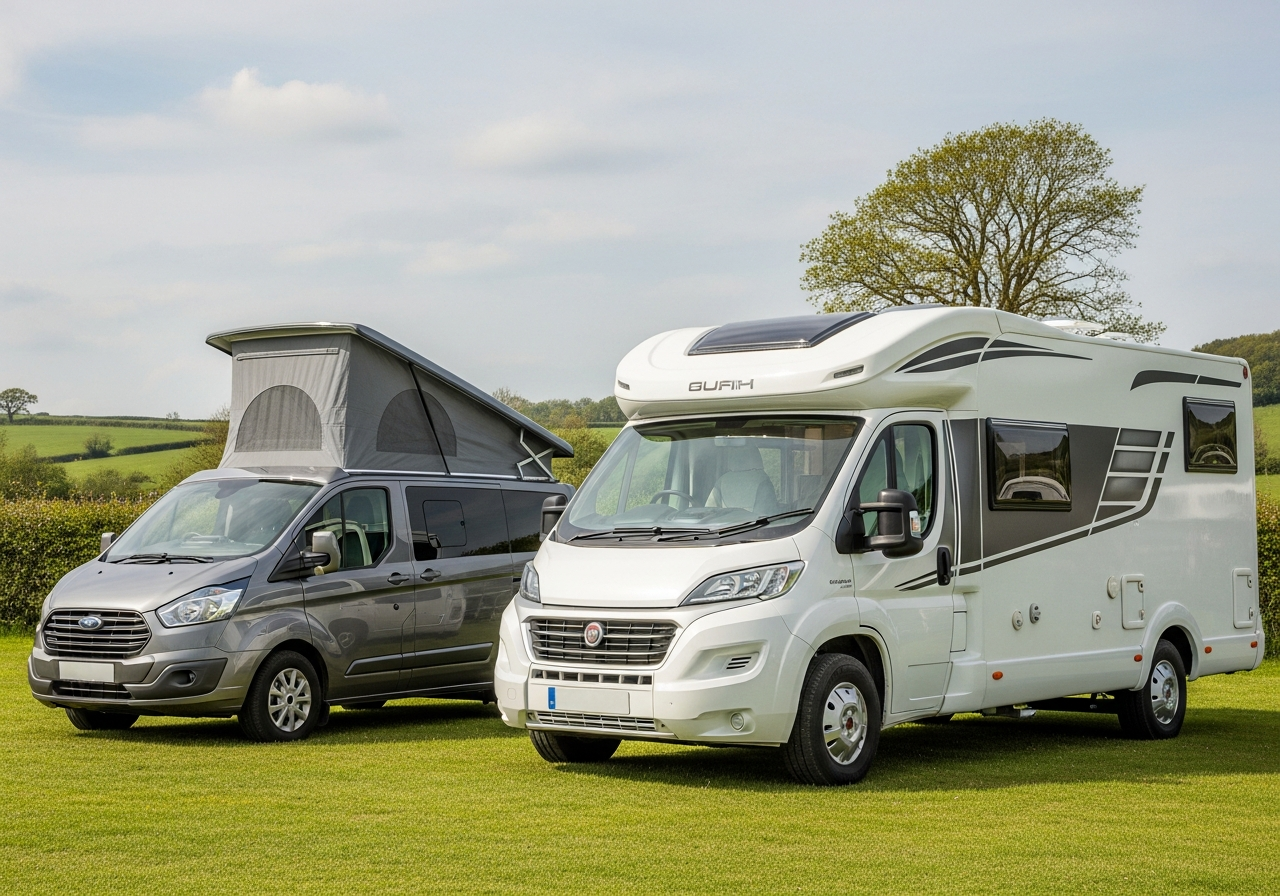
The choice ultimately comes down to your primary use case. If your van doubles as your daily vehicle and your trips are mainly confined to fairer weather, the pop-top’s versatility is hard to beat. However, if you are prioritising the quality and comfort of your time away and want to extend your travel season, the high-top presents a clear advantage.
Choosing Your Campervan Roof Upgrade: Is a High-Top Right for You?
The "right" roof depends entirely on the life you lead and the adventures you're planning. Let’s look at how a high-top upgrade serves our different traveller types.
For the Growing Family
Remember the pain of trying to get kids dressed and organised in a cramped space on a rainy morning in Wales? A high-top solves this instantly. With full standing height, there’s room for everyone to move around without getting in each other’s way. The huge increase in overhead storage means you can pack all the extra gear, food, and games needed for longer school holidays. Most importantly, the superior insulation means a warmer, more comfortable sleeping environment for children, extending your camping season into the Easter and October half-terms with confidence.
For the All-Season Adventurer
If your passion is chasing winter swells in Cornwall or hiking the snow-dusted peaks of the Cairngorms, a pop-top’s canvas is your biggest weakness. A high-top campervan offers the robust insulation needed for comfortable winter camping. It creates a warm, dry sanctuary to return to after a day in the elements, with space to hang wet gear and a structure that won’t budge in a gale. The battle against condensation is far easier to win with solid walls and a proper roof vent, making it the only truly viable option for serious year-round UK adventures.
For the Retiring Full-Timer
When your van becomes your home, comfort and convenience are non-negotiable. A high-top is the foundation for a truly liveable space. It provides the necessary height to build a permanent, comfortable bed you don't have to make up every night, and crucially, allows for an internal shower and toilet. For long-term travel or full-time van life, the space, storage, and home-like amenities unlocked by a high-top roof aren't just a luxury; they're an absolute necessity for a sustainable and enjoyable retirement on the road.
"Thank you to Orange Campers for upgrading our pop top VW campervan to a high top. ... Being able to stand up in the van plus the skylight... has made such a difference. ... The insulation means we can use the van all year round." — Maria Lewis
The Practicalities of a Campervan Roof Conversion in the UK: Cost, Weight & Regulations
Embarking on a campervan roof conversion is an exciting prospect, but it’s essential to understand the practical implications. A high-top is a significant structural change, and it pays to be informed about the costs, weight considerations, and official UK regulations.
Typical Costs of Upgrading
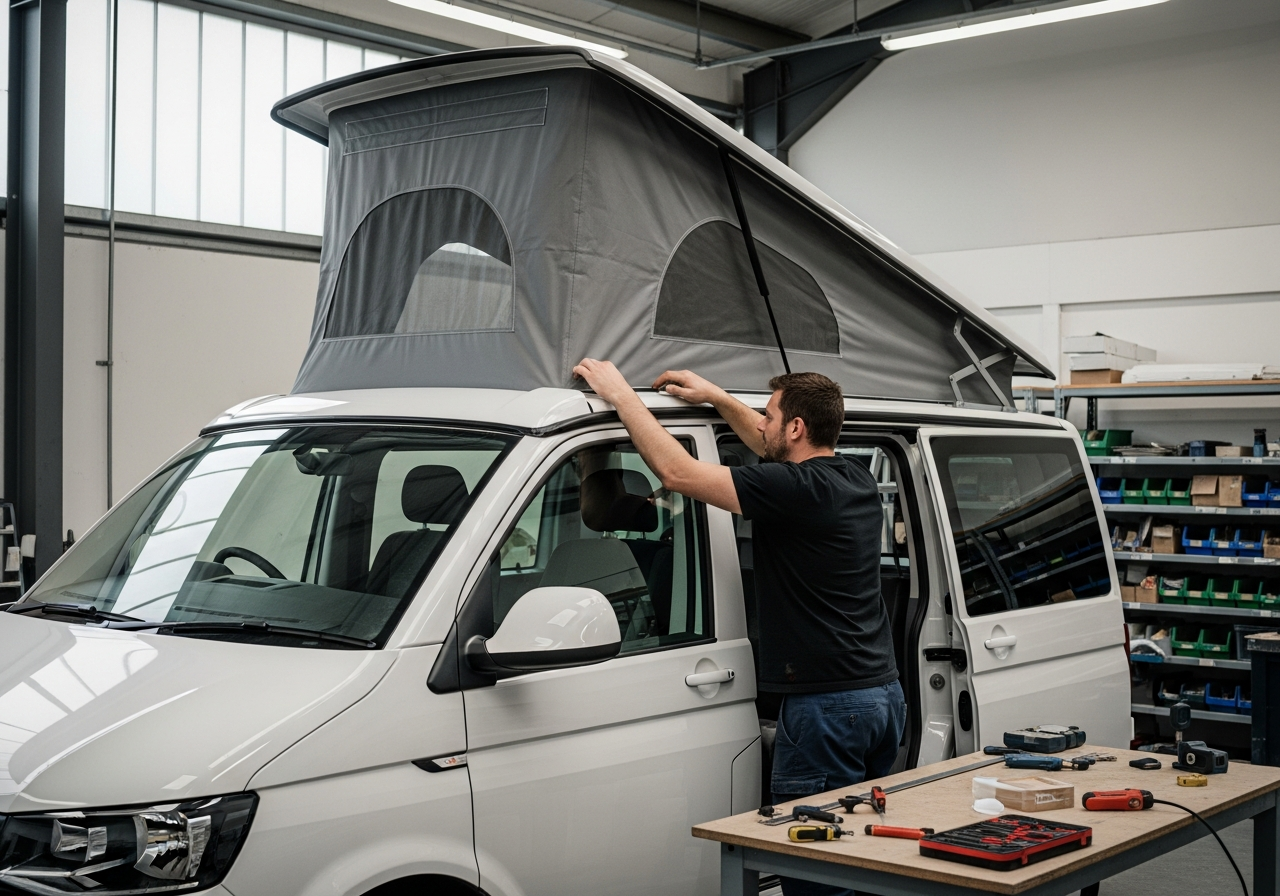
A professional high-top roof conversion in the UK is a specialist job and the price reflects that. While a basic pop-top can be fitted from around £3,000, a high-top conversion is a more involved process. You should budget anywhere from £5,000 to over £9,000 for a quality, insulated high-top to be supplied and fitted by a reputable converter. The final price will depend on the base vehicle, the style of the roof, and extras like windows, vents, or internal finishing.
Vehicle Weight and the 3.5T Limit
This is arguably the most critical consideration. A high-top roof adds significant fixed weight to your vehicle, far more than a pop-top. Most people in the UK drive a campervan on a standard Category B car licence, which limits them to vehicles with a Maximum Authorised Mass (MAM) of 3,500kg. The extra weight of the roof, combined with your conversion, water, fuel, and belongings, can easily push you over this limit.
Check Your Weight Before and After
DVLA Reclassification
When you significantly change your van's body type, such as adding a high-top roof, you may need to inform the DVLA to have its classification changed to a 'Motor Caravan' on the V5C logbook. This can have implications for insurance, MOT tests, and speed limits. The criteria for reclassification are specific, covering features like a fixed bed, cooking facilities, and storage. Always consult the latest official GOV.UK guidance on converting a vehicle into a motor caravan to ensure you comply with all requirements.
Finding a Reputable Converter
This is not a DIY job for the faint-hearted. The roof is a critical part of your vehicle's structural integrity. Always use an experienced, professional conversion company that understands the specific requirements of your base vehicle. A good converter will ensure the roof is fitted safely, sealed correctly to prevent leaks, and finished to a high standard. Check their reviews, ask to see previous work, and ensure they provide a proper warranty.
Frequently Asked Questions
The main advantages of a high top are permanent full standing height, vastly superior insulation for year-round comfort, greater potential for storage with overhead lockers, and better security and quietness in bad weather. This makes them ideal for longer trips and more serious camping.
Image credits
- Generated illustration
- Generated illustration
- Generated illustration
- Generated illustration
Tags
Need a Pop Tops Specialist?
Find trusted professionals for your campervan project.
Browse Pop Tops Specialists
Discussion (17)
Oh, this brings back memories of when Brian and I first started looking for a van. We always knew we'd want something with plenty of headroom, especially living in it for months on end. It sounds like a big decision for folks, that £5,000 to £9,000 price for a conversion is quite something, but the difference it makes for year-round comfort, particularly here in the UK, truly is lovely.
Cheers for this, really makes you think. My MWB Renault Master is year one of the build so still planning some things. I saw the bit about high-top conversions costing between £5,000 and £9,000+. That's a serious chunk of change to budget for, especially when you're doing a lot of it yourself already. Does that figure include the fitting, or is that mostly for the roof kit itself do you think?
We're always in the Lake District and honestly, the bit about rainy days really hit home for us. Thinking about those prices now.
Okay this article has given me so much to think about! I've just bought my SWB Transit Custom and i was already feeling a bit overwhelmed, now i'm low-key worried about the 3.5T limit you mentioned. Is it really easy to go over that when you add a high-top AND all your interior build? I'm excited but also a bit nervous about all the choices!
It's a proper minefield isn't it? We've got a Boxer with two kids, and honestly the weight creeps up so fast, especially with all the holiday gear. We went for a pro-conversion precisely to make sure we stayed sensible, but it's always something to keep an eye on, so don't feel too nervous!
Good breakdown of the high-top advantages. I'm building a Crafter myself and the point about staying under the 3.5T limit with the added weight is critical. It's not just the roof itself but all the extra fit-out that more space tempts you with, especially when you're looking at heavier battery banks for off-grid. Worth noting how easily that can add up.
Yeah, fair point. The extra fit-out and heavy battery banks beyond just the roof itself really pile on the weight. We'll add that.
I'm slowly fitting out an ex-courier MWB Transit myself, and this piece really got me thinking about the roof. My current thought was a DIY pop-top but that £5k-£9k+ for a proper high-top conversion is a hefty chunk, especially when I'm doing all the interior work. It does make a difference to year-round comfort mind, which is a big factor if you're stuck inside. Still, you can't beat the cost savings of fabricating your own fixed roof, if you've got the skills.
Aye, this really resonates. The bit about rainy days in the Lake District and the canvas flapping is so true-to-life, that was a major driver for us choosing a high-top Sprinter from day one, not wanting to deal with those compromises. For full-time living, that permanent standing height and solid insulation is non-negotiable, even if the £5,000 to £9,000+ conversion cost for others seems steep initially. It's an investment in comfort.
Right then, this article hits the nail on the head. We get folks all the time at the workshop wanting to move from a pop-top, usually because the kids are growing or they're just sick of setting up camp in the rain. One client, a retired couple, swore by their pop-top for years but the insulation just wasn't cutting it in winter. We put a proper high-top on their T5, rigid foam and all. Transformed the van, honestly. The article mentions costs between five and nine grand for a high-top, which is pretty much what we're seeing for a decent job, including the interior finishing. It's a big investment but it absolutely pays off in comfort if you're serious about year-round use.
Thinking about a MWB Transit and if i went high-top, are those 2-metre car park barriers an absolute nightmare around the London area?
This is literally me right now! My SWB Vivaro with its half-finished interior is great for quick surf trips but trying to stand up in it feels like a bad joke on rainy days. Ngl the £5,000-£9,000+ for a high-top is a proper chunk of change though. Still, the thought of actually being able to cook inside without hunching is tempting.
£5k-£9k+ for a high-top is a good chunk of change! My whole van cost less than the bottom end of that. Cracking info, mind.
Truth be told, that kind of investment certainly makes you think. Our own single-decker conversion, many years ago, cost a good deal more than that, but for six months of touring each year, the comfort of proper standing room and living space has been absolutely invaluable to us.
That £5-9k+ conversion cost is a serious chunk. Fair play if you needs the space.
It's a common journey, moving from a pop-top to needing more permanent space. I went straight for a high-top myself when self-building my Boxer, so didn't have to consider an upgrade. But that £5,000 to £9,000+ figure for a conversion is definitely a big investment. For full-timers or anyone seriously planning longer trips, the extra space and proper insulation are massive improvements, mind. You don't miss that flapping canvas in a gale, right enough.
Yeah, fair point on the conversion cost being a big investment, tbh. We'll add a section to the article to properly highlight that outlay.