Your UK Guide to Campervan Gas Certification: Why it Matters & How to Get Yours Sorted

Founder of CamperBrain, builder of its UK converter directory and conversion-cost data.
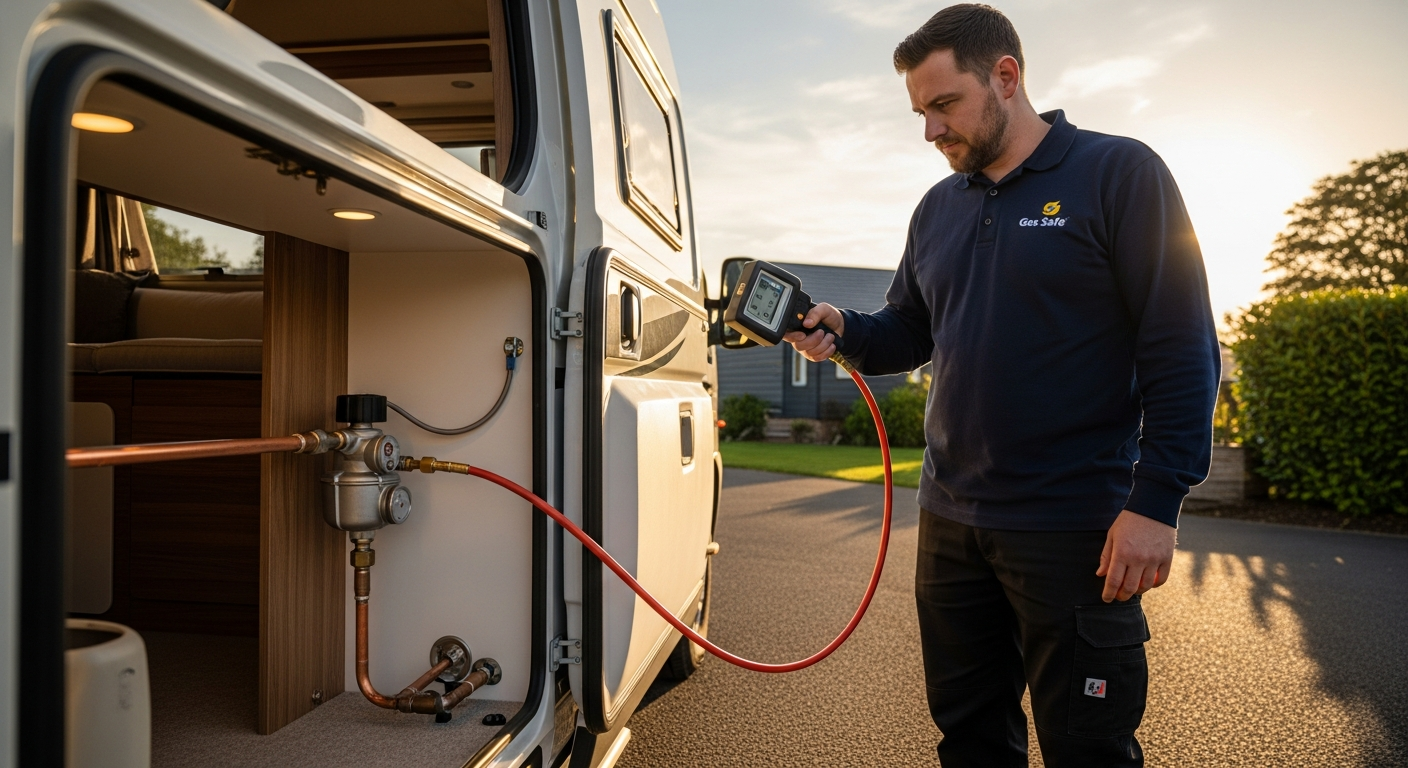
Your UK Guide to Campervan Gas Certification: Why it Matters & How to Get Yours Sorted
Getting your campervan's gas system signed off can feel daunting, but it's vital for your safety, insurance, and peace of mind. Here’s everything UK self-builders and buyers need to know to get it right.
Why Your Campervan's Gas System Needs a Safety Certificate
A campervan gas safety certificate is official proof that your van's gas installation has been inspected and deemed safe by a qualified professional. Think of it as an MOT for your habitation space. The engineer performs a series of checks on your pipework, appliances, and ventilation to ensure everything meets UK standards.
While it's not a legal requirement for a privately owned and used vehicle in the same way an MOT is, skipping it is a false economy. There are three critical reasons why getting a certificate is a non-negotiable part of responsible campervan ownership.
First and foremost is your personal safety. A faulty gas system in a tiny, enclosed space is a recipe for disaster. Leaks can lead to fires or explosions, and incomplete combustion from a poorly maintained appliance can produce carbon monoxide—a colourless, odourless gas that can be fatal.
Second, your insurance provider will likely demand it. In the event of a gas-related fire or incident, your insurer may refuse to pay out if you cannot provide a valid certificate, potentially voiding your policy. Many specialist campervan insurers now make it a mandatory condition of cover.
Finally, it grants you access. A growing number of UK campsites and event organisers now require proof of a valid gas safety check before allowing you on site. It's their way of ensuring the safety of all their guests. For anyone looking to sell their van, a valid certificate is a huge mark of confidence for potential buyers.
The Official Bit: UK Regulations for a Campervan Gas Safety Certificate
When it comes to gas work in the United Kingdom, one name matters above all others: the Gas Safe Register. It is the UK's only official registration body for gas engineers, and it's illegal for anyone not on the register to carry out gas work for money.
The document you receive after a successful inspection is typically a 'Landlord/Homeowner Gas Safety Record' (previously known as a CP6 or CP12 form), which has been adapted for a Leisure Accommodation Vehicle (LAV). This record confirms that your system is safe at the time of the inspection.
Engineers work to a specific set of standards, primarily BS EN 1949. This is the British and European standard that specifies the requirements for installing LPG systems for habitation purposes in leisure vehicles. It covers everything from the materials used for pipework and the design of gas lockers to the requirements for ventilation and the safe installation of appliances.
Crucially, not just any Gas Safe engineer can work on your van. Your home boiler engineer is unlikely to have the right qualifications. You must find an engineer who is specifically qualified to work with LPG (Liquefied Petroleum Gas) and in LAVs (Leisure Accommodation Vehicles). Always check their credentials on the Gas Safe Register website before booking.
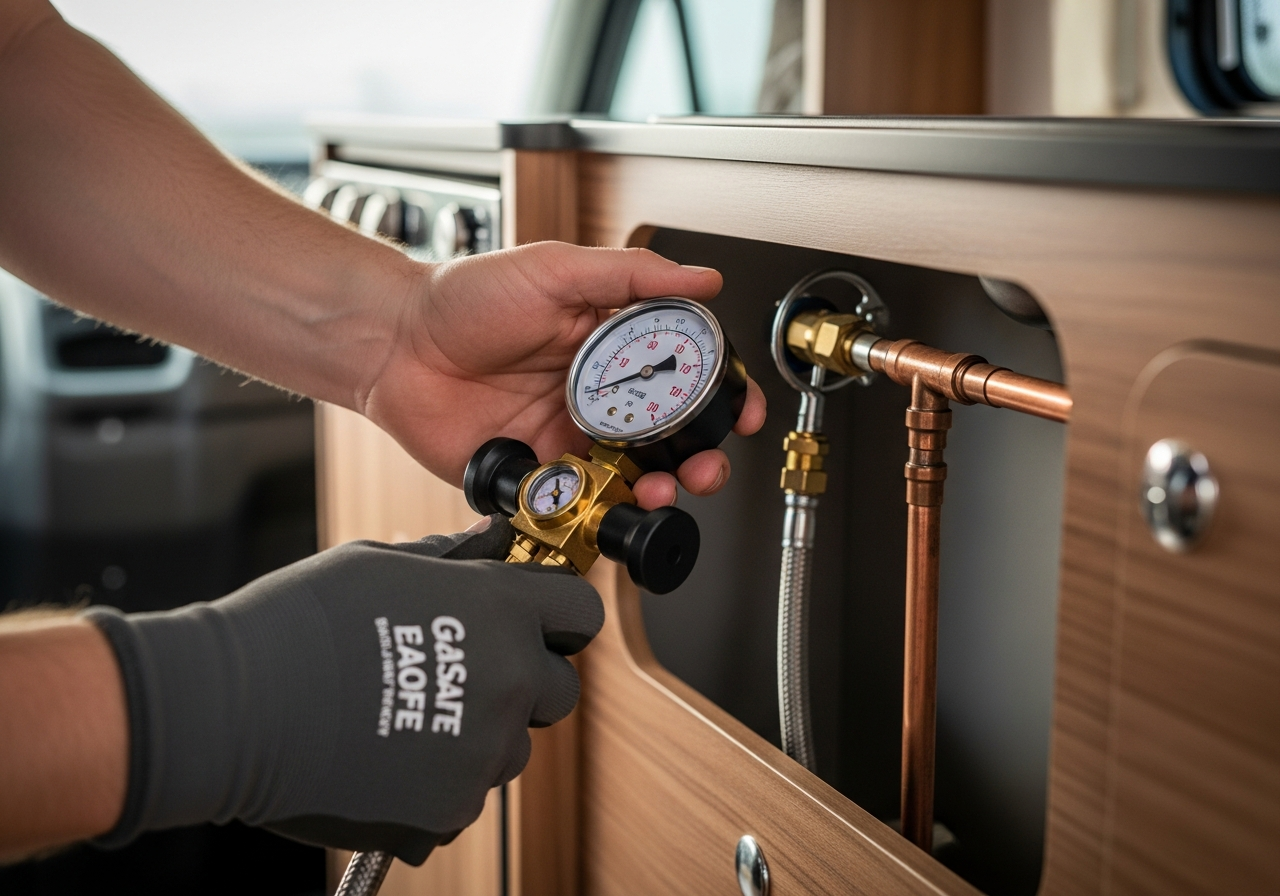
For the Self-Builder: How to Get Your DIY System Certified
For the DIY van builder, getting a gas safety certificate is the ultimate validation of your hard work. It's the moment a professional confirms your installation is safe and compliant. However, finding an engineer willing to certify a system they didn't install can be tricky, so it pays to build it right from the start.
An engineer will meticulously inspect your entire system. Key points they will check against the BS EN 1949 standard include:
- A sealed gas locker: Any gas bottles stored inside the van must be in a purpose-built, sealed metal locker. This locker must have a drop-out vent—a hole in the floor that allows any leaked gas (which is heavier than air) to escape safely outside.
- Correct regulator: You must use the correct type of regulator for your chosen gas (propane or butane) and ensure it's securely connected.
- Proper pipework: The standard requires fixed pipework to be made of rigid copper or stainless steel. Flexible, high-pressure hose should only be used for short connections, such as from the gas bottle to the regulator. It must never pass through walls or bulkheads.
- Secure appliances: All fixed appliances like hobs, ovens, and heaters must be securely mounted and connected correctly, often with their own isolation valve.
- Ventilation and safety: The engineer will check for adequate ventilation in the living area and confirm you have a working carbon monoxide alarm.
The best way to find a qualified professional is via the official Gas Safe Register website. You can search by postcode for local engineers. Be sure to filter for those qualified in 'LPG' and 'LAV'. It's worth calling a few and explaining that you have a self-build conversion; some are more comfortable with this than others.
During the inspection, expect the engineer to perform a tightness test to check for leaks, test the function of each appliance, check flame pictures, and ensure all safety devices are working.
How much does a campervan gas certificate cost?
The cost for a campervan gas safety certificate in the UK typically ranges from £85 to £150. Prices can vary depending on your location, the complexity of your system, and whether the engineer needs to travel to you. Some may charge more, especially for larger or more complex systems, with some quotes reaching up to £255.
For the Buyer: Your Gas Safety Checklist for a Used Campervan
When viewing a used campervan, particularly a private or self-build conversion, the gas system should be one of your biggest areas of focus. An unsafe system can be costly and dangerous to put right.
Your first question to any seller should be: "Do you have a current gas safety certificate?" If the answer is no, or they seem hesitant, consider it a major red flag.
Here is a simple checklist to run through when viewing a van:
- Check the certificate: Ask to see the physical copy. Check the date to ensure it's still valid (they last for 12 months). Note down the engineer's name and Gas Safe ID number.
- Verify the engineer: Later, use the Gas Safe Register website to check that the engineer's ID is genuine and that they hold the necessary LPG and LAV qualifications.
- Inspect the gas locker: Open it up. Is it a proper, sealed metal box? Does it have a drop-out vent in the floor? Are the gas bottles securely strapped down?
- Look at the pipework: Look under the sink and along the run to the appliances. You should see predominantly rigid copper pipe, securely clipped in place. Be wary if you see long runs of flexible rubber hose, especially if it's secured with jubilee clips—this is a sign of a DIY job that does not meet the standards.
- Use your nose: Does anything smell of gas? Even a faint whiff is a serious warning sign.
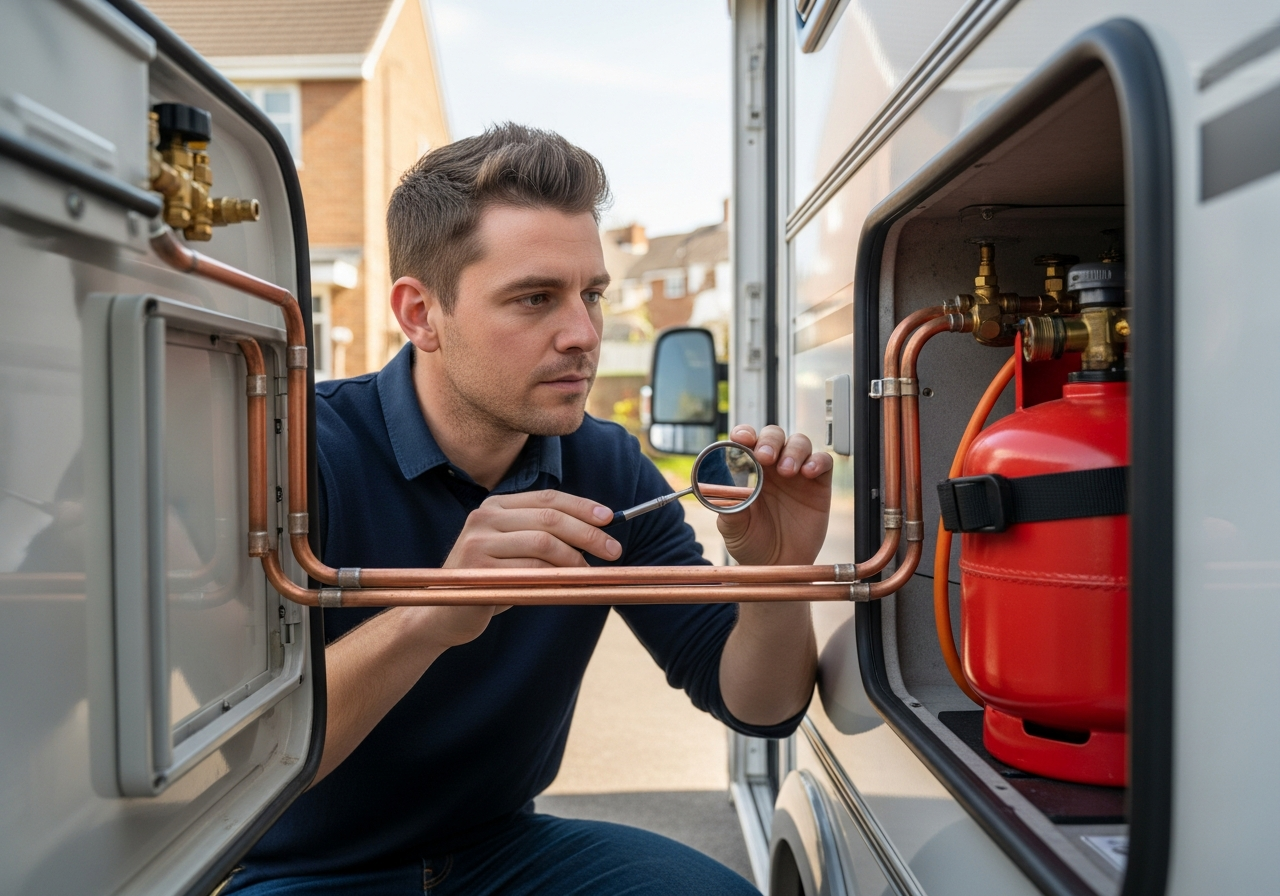
Commissioning a Build? What to Demand From Your Converter
If you're paying a professional company to build your dream campervan, you have every right to expect the highest standards of safety and compliance. A gas safety certificate isn't a "nice to have"—it's an essential piece of handover documentation.
A reputable professional converter must provide a valid gas safety certificate as part of the final handover package. This is your proof that the work has been completed to the correct UK standards by a suitably qualified person.
Before you even sign a contract, you should be asking two key questions:
- "Do all your conversions come with a Gas Safe certificate as standard?"
- "Are your gas installations completed and certified by a Gas Safe registered engineer who is qualified for LPG in leisure vehicles?"
The answer to both should be an unequivocal "yes." Any hesitation or vagueness is a major red flag. The certificate should be provided to you at the end of the build, alongside other critical documents like your electrical installation certificate, vehicle weight certificate, and manuals for all the appliances.

Frequently Asked Questions
Frequently Asked Questions
For a privately owned campervan used only for personal holidays, a gas safety certificate is not a legal requirement. However, it is strongly recommended for safety and is often required by insurance companies and campsites. If you rent out your campervan, it is a legal requirement under the Gas Safety (Installation and Use) Regulations 1998.
Sources
Image credits
- Generated illustration
- Generated illustration
- Generated illustration
- Generated illustration
Tags
Need a DIY Support Specialist?
Find trusted professionals for your campervan project.
Browse DIY Support Specialists
Discussion (16)
We find that campsites are very particular about gas certificates now, that part about access is so true.
Cheers for this, was wondering about the cost. Is that £85-£150 range common even for DIY installs on a wee van?
Yeah, fair point on the cost for DIY installs on smaller vans. That A385-
A3150 range is pretty standard, as the price is more about the system's complexity and the time taken than the van's size or if it's a self-build.
Ngl, this article just reminded me how much more I need to do on my Vivaro! I'm just winging it with the surf trips right now, but that £85-£150 price for a safety check actually sounds quite reasonable. Getting a qualified Gas Safe engineer with 'LPG' and 'LAV' seems like the next big hurdle after I actually finish my build. So much to sort!
This was so useful, cheers! I've literally just bought my Transit Custom and the gas part has been stressing me out the most so far. I didn't realise how many campsites demand a certificate even if it's not strictly a legal thing for private vans. Makes me even more nervous to get that bit sorted before I even think about insulation, low-key.
This article genuinely resonated with us, Priya and i spent ages agonising over the gas setup in our MWB Crafter build. You read so many horror stories online, it makes you properly paranoid about getting it wrong. We ended up getting an engineer in even though it's technically 'private use' for the peace of mind alone. It was worth every penny, tbf. Knowing everything was leak-tested and compliant was such a relief, especially when we take it out to the Lakes every other weekend. The part about typical checks being between £85 and £150 feels about right, ours was in that ballpark. It's such a critical area, you really can't cut corners on safety for the sake of a few quid.
This is spot on about the insurance, that's what's driving me to get mine sorted for the Transit, you don't want to find out the hard way, mind. The £85 to £150 price range for a check seems fair enough for the peace of mind, though it all adds up when you're doing a conversion yourself. Good reminder about the importance of ventilation too, can't be too careful with gas in a small space.
This article is spot on, the bit about campsites asking for proof really resonated with us! We had one place near Padstow last summer that wouldn't let us pitch without seeing our gas cert, even though our Boxer is professionaly converted. With two kids, safety is always top of mind, so it's good to know we're doing things proper.
Proper conversions definitely make things easier at campsites! My crusty old LDV Convoy would probably get a few raised eyebrows, so I'm putting off thinking about the gas cert for now, mind you. Still, the safety side is bang on, you're right.
Good reminder this. Always knew it was a must for peace of mind, especially with the little'uns. £150 for a check does sting a bit when you're watching the pennies on a slow build, but fair play, what's safety worth eh. I'm three years into my Sprinter now, best get it sorted agen for summer
This has been helpful, I'm just starting to look at doing a MWB Transit conversion myself and the gas installation side of things has been playing on my mind. I'm glad you mentioned that even though it's not a legal requirement for private vans, it's pretty much mandatory for insurance and campsites, that bit always confuses me. Quick one though, do most self-builders like me find it hard to get a Gas Safe engineer to sign off on their own installed pipework and appliances? It feels like a big hurdle.
It's worth noting that many Gas Safe engineers won't sign off on work they haven't personally installed or overseen due to liability, which is often the real hurdle. For my LWB Crafter, I'm planning on having an LPG specialist do the final connection and test to sidestep that common issue, just to clarify.
Aye, this article really hits the nail on the head regarding gas safety. When I first had my LWB Sprinter converted for full-time living, the gas system was one of the biggest worries. You spend so much time in a small space, the thought of anything going wrong with CO or a leak is genuinely terrifying. I actually ended up having to get a second opinion on my certificate from a different engineer because the first one seemed a bit lax. For what it's worth, finding someone proper isn't always easy, but it's absolutely crucial. The cost you mention, between £85 and £150, is spot on, that's roughly what I've paid for checks over the past few years here in Edinburgh. It’s a small price for knowing everything’s sound, especially when you're relying on it every single day.
This is a topic close to our hearts, given the old bus is our home for half the year up here in Cumbria. We've always made sure our gas system is checked religiously, mainly for peace of mind you understand, especially after thirty years touring. It's a small price to pay, and that £85-£150 estimate you mentioned for a safety check sounds about right for the thoroughness involved.
Peace of mind is one thing, but when you're converting vans for paying clients, it's non-negotiable legal compliance. That £85-£150 is small change when you consider the potential hassle for your customer if it's not done right.
Getting the gas certificate for my Boxer was one of the biggest initial stresses, especially living off-grid so much of the time up here. Knowing everything is properly installed and checked by an expert really gives you peace of mind, it's not just about insurance. i'd done most of the work myself so having that professional sign-off was a big one. Even though it's not strictly 'required' for private vans, it just feels like the right thing to do. The peace of mind is worth every penny. I remember looking at the typical cost of £85 to £150 and thinking it was a small price for knowing i wouldn't be breathing carbon monoxide or worse. It's part of being responsible on the road.