



The Ultimate CamperBrain Guide to Camping Blankets for UK Campervan Owners
Right, let’s talk blankets. Not your nan’s knitted throw or that old duvet from the spare room. We’re talking proper camping blankets. If you’ve spent any time in a campervan, you already know space is gold and versatility is king. That’s why a good camping blanket isn't just a nice-to-have; it's an absolute essential.
I’ve built my fair share of vans, and I’ve seen countless setups. One thing remains constant: everyone needs a reliable way to stay warm and comfortable, whether they’re tucked up inside on a chilly evening or sat outside watching the sunset. A dedicated camping blanket beats a regular duvet hands down for its packability, durability, and sheer adaptability. This guide will cut through the noise, helping you pick out the best camping blanket for your UK campervan adventures. We'll look at what really matters, compare some top contenders, and make sure your next trip is as cosy as it gets.
Why a Camping Blanket is a Campervan Game-Changer
You might think, "I've got a sleeping bag, or an old duvet; why bother with a camping blanket?" Believe me, there's a world of difference. Your campervan lifestyle demands gear that works hard and earns its keep. A camping blanket does exactly that.
First off, they’re designed for the outdoors. This isn't just marketing fluff. These blankets use durable, often water-resistant fabrics that stand up to spills, dew, and general rough-and-tumble use. Try dragging your nice home duvet out for a picnic on damp grass – you’ll regret it instantly.
Then there's the packability. Space in a campervan is always at a premium. Camping blankets, especially the good ones, compress down to an incredibly small size. They often come with their own stuff sack, meaning they tuck away neatly under a seat, in an overhead locker, or even in a drawer. This is a massive win over bulky duvets that hog precious storage.
Versatility is another huge factor. Think about it: a sleeping bag is great for sleeping, but try wrapping it around you while you’re cooking dinner, or using it as an extra layer over your legs when you're chilling outside. It just doesn't work. A camping blanket, on the other hand, can be a shawl, a picnic rug, an extra layer on your bed, perhaps with a good mattress topper, a pet's blanket, or even a makeshift curtain. Its adaptability makes it invaluable for the varied demands of campervan life.
Quick warmth is something you’ll appreciate on those nippy mornings or sudden evening chills. You don’t always want to fire up the diesel heater, especially if you just need a bit of immediate comfort. A good camping blanket provides instant, lightweight warmth without the fuss. It's perfect for those moments when the sun dips, or you’re just a bit peckish for that extra layer.
Finally, hygiene. Many camping blankets are machine washable, a massive bonus when you’re living in a small space and things inevitably get a bit grubby. Keeping your gear fresh and clean is far easier with a blanket designed for easy care. So, forget the compromises. A proper camping blanket is an investment in comfort, convenience, and genuine campervan practicality.
Key Features to Look For in Your Campervan Camping Blanket
Choosing the right camping blanket isn't rocket science, but there are definitely a few key areas where you need to pay attention. Get these right, and you'll have a blanket that serves you well for years. Skimp, and you'll end up with something that frustrates more than it comforts.
Insulation Type: Down vs. Synthetic – The Great Debate
This is probably the biggest decision you'll make. Both have their strong points, and both have their weaknesses, especially when it comes to campervan living.
Down Insulation
Down is the gold standard for warmth-to-weight ratio. It's incredibly light, packs down tiny, and provides fantastic insulation for its bulk. Think of those high-end sleeping bags – they’re almost always down.
- Pros: Super warm, incredibly lightweight, compresses exceptionally well. If space and weight are your absolute top priorities, down is usually the winner. It feels luxurious and lofty.
- Cons: Pricey. Seriously, good down costs a fair bit of quid. More importantly for UK campervan owners, down loses its insulating properties when wet. If it gets soaked, it’s basically useless until it’s thoroughly dried out, which can be a real pain on the road. It also takes longer to dry than synthetic. Some people also have ethical concerns about down sourcing, though many reputable brands use responsibly sourced down.
- Best for: Dry climates, those who prioritise ultimate packability and warmth, and careful users who won't expose it to a lot of moisture.
Synthetic Insulation
Synthetic insulation, usually made from polyester fibres, is designed to mimic down’s warmth but with a crucial advantage: it performs much better when wet.
- Pros: Retains warmth even when damp, dries much faster than down, generally more affordable, and hypoallergenic. It's more durable and easier to care for. For the often-damp UK climate, this is a massive plus. You can spill a cuppa on it, or use it on slightly dewy grass, and it'll still keep you warm.
- Cons: Heavier and bulkier than down for the same level of warmth. It doesn't compress quite as small, though modern synthetics are getting much better in this regard.
- Best for: Wet or damp conditions, budget-conscious buyers, those who need durability and easy care, and anyone prone to spills or using their blanket outdoors frequently. For most UK campervan owners, synthetic is often the more practical choice.
Material & Durability: Shell Fabric Matters
The outer shell of your blanket is what protects the insulation and takes the brunt of daily use. You want something tough.
- Ripstop Nylon/Polyester: This is the most common and best choice. Ripstop fabric has a grid pattern woven into it, which prevents small tears from becoming big rips. It’s light, durable, and often treated for water resistance. Look for denier ratings (e.g., 20D, 30D); higher numbers mean thicker, more durable (but slightly heavier) fabric.
- Water Resistance: A DWR (Durable Water Repellent) coating is a non-negotiable for campervan use. It means light rain, dew, or spilled drinks will bead up and roll off, rather than soaking into the fabric and insulation. This is crucial for longevity and comfort, especially if you plan to use it outside.
- Softness: While durability is key, you also want something that feels nice against your skin. Many blankets balance a tough outer shell with a softer inner lining, or use a soft-touch ripstop.
Size & Packability: Every Inch Counts
In a campervan, every cubic inch of storage is precious. Your blanket needs to pull its weight without eating up your entire wardrobe space.
- Packed Size: This is arguably more important than the unpacked dimensions. A good camping blanket will compress into a small stuff sack, often no bigger than a loaf of bread or a small football. Check the product specifications for packed dimensions.
- Unpacked Size: Consider how you'll use it. A single throw (around 1.2m x 1.8m) is great for one person, a lap blanket, or an extra layer. A larger "double" or "quilt" size (closer to 2m x 2m) is brilliant for two people, for wrapping around yourself completely, or as a proper top layer on your bed. Don’t go too small; you want to be able to properly snuggle into it.
Weight: Light is Right
You're not usually backpacking with a camping blanket, but lighter gear is always better in a campervan. It’s easier to handle, less of a burden on your payload, and often indicates higher quality materials. A good synthetic blanket might weigh 800g-1.2kg, while a down one could be as little as 400-600g.
Versatility & Features: More Than Just a Blanket
This is where camping blankets really shine over regular ones.
- Snaps/Buttons: Some blankets have snaps around the edges, allowing you to create a makeshift poncho, a sleeping bag-like footbox, or even connect two blankets together. This is a brilliant feature for hands-free warmth while cooking or reading.
- Foot Pockets: A dedicated foot pocket is a small but mighty luxury. It keeps your feet toasty and stops the blanket from sliding off.
- Multi-use Design: Can it convert into a pillow when stuffed? Does it have a dedicated carry strap? The more functions it can perform, the more valuable it becomes in a compact living space.
- Corner Loops: These are handy for pegging the blanket down if you’re using it as a ground cover, or for hanging it up to air out.
Care & Maintenance: Keep it Fresh
You're living in a small space; things get dirty. Being able to easily clean your blanket is a huge plus.
- Machine Washable: Most synthetic blankets are machine washable on a gentle cycle. Down blankets can be washed, but it's a more involved process and often requires specialist detergents and careful drying (with dryer balls) to restore loft.
- Drying Time: Synthetic blankets dry much faster, which is a big deal when you have limited drying space or unreliable weather.
Price: What to Expect and Value for Money
Camping blankets range from budget-friendly options under £30 to premium down versions well over £100.
- Under £30: You'll find basic synthetic throws. They'll offer warmth and some packability, but might compromise on durability, water resistance, or advanced features. Good for a secondary blanket or if your budget is tight.
- £30-£70: This is the sweet spot for many synthetic blankets. You'll get good quality, decent packability, and often some useful features like snaps and water resistance. Excellent value here.
- £70+: This range includes higher-end synthetic blankets with superior warmth-to-weight and features, as well as entry-level down blankets. If you’re serious about ultimate warmth and packability, this is where you’ll invest.
Remember, you're not just buying warmth; you're buying convenience, durability, and versatility. Spending a bit more on a quality blanket that lasts years and performs brilliantly is almost always a better investment than buying cheap and replacing often.
Deep Dive: Our Top Picks for Campervan Owners
Now that we know what to look for, let's get into some specific blankets that are hitting the mark for UK campervan owners. I've seen these out in the wild, and they're solid contenders for different needs and budgets.
1. Proglobe Packable Camping Travel Blanket Pillow – £19.99
Let's kick things off with a real budget-friendly option that punches above its weight. The Proglobe is a fantastic entry point for anyone needing a compact, versatile blanket without breaking the bank.
- What it is: This is a lightweight, packable synthetic blanket that cleverly converts into a pillow when stuffed into its integrated pouch. It’s designed for travel, so compactness is key.
- Campervan Pros:
- Unbeatable Price: At just under twenty quid, it's hard to argue with the value. Perfect if you need multiple blankets or are on a really tight budget.
- Pillow Conversion: This is brilliant for a campervan. Two items in one! It saves space and means you always have a spare cushion or pillow handy.
- Highly Packable: It compresses down to a very small size, making it easy to stash anywhere.
- Lightweight: You’ll barely notice it in your gear.
- Campervan Cons:
- Limited Warmth: It’s a thin synthetic blanket, so don't expect it to keep you toasty on a freezing winter night. It’s more for mild evenings or as an extra layer.
- Durability: At this price point, the materials might not be as robust as higher-end options. Treat it with a bit of care.
- Water Resistance: Likely minimal. Don't rely on it for damp ground or heavy dew.
- Verdict: This is an excellent choice as a secondary blanket, a picnic throw, or a lightweight summer evening wrap. It’s ideal for those who need maximum versatility on a shoestring budget. If you're looking for a primary, all-season warmth provider, you'll need to step up. But for a handy, multi-purpose travel companion, it's spot on.
2. BEARZ Outdoor Pocket Sized Travel Blanket Review – £21.99
Another budget-conscious contender, the BEARZ Outdoor blanket focuses on extreme portability. This isn't your traditional fluffy blanket; it's more of a ground cover or minimalist emergency layer.
- What it is: A very thin, almost tarp-like nylon blanket designed to be incredibly compact and lightweight. It's often marketed as a picnic blanket or emergency shelter.
- Campervan Pros:
- Pocket-Sized Packability: This thing is tiny when packed – think smartphone size. You can literally keep it in your glove box or a backpack pocket.
- Extremely Lightweight: Almost negligible weight, perfect for minimalist packers.
- Waterproof: Often made from a coated ripstop nylon, it excels as a ground sheet or shelter from light rain.
- Great Value: Like the Proglobe, it’s a lot of utility for not much cash.
- Campervan Cons:
- Zero Insulation: This is not a warmth blanket. It will block wind and act as a barrier, but it offers virtually no thermal insulation. Do not buy this expecting to snuggle up warm.
- Not Cosy: The material is thin and crinkly, not soft or comfortable for wrapping around yourself.
- Limited Versatility: Its primary use is as a ground sheet or rain cover, not a comfort blanket.
- Verdict: The BEARZ blanket is brilliant for what it is: a super-compact, waterproof ground cover or emergency shelter. It’s perfect for throwing under a picnic, keeping your bum dry on a wet bench, or providing a clean surface. It is NOT a blanket for warmth or comfort. Think of it as a highly portable tarp, not a cosy throw. Every campervan should have one for those unexpected moments, but don't confuse it with a proper camping blanket.
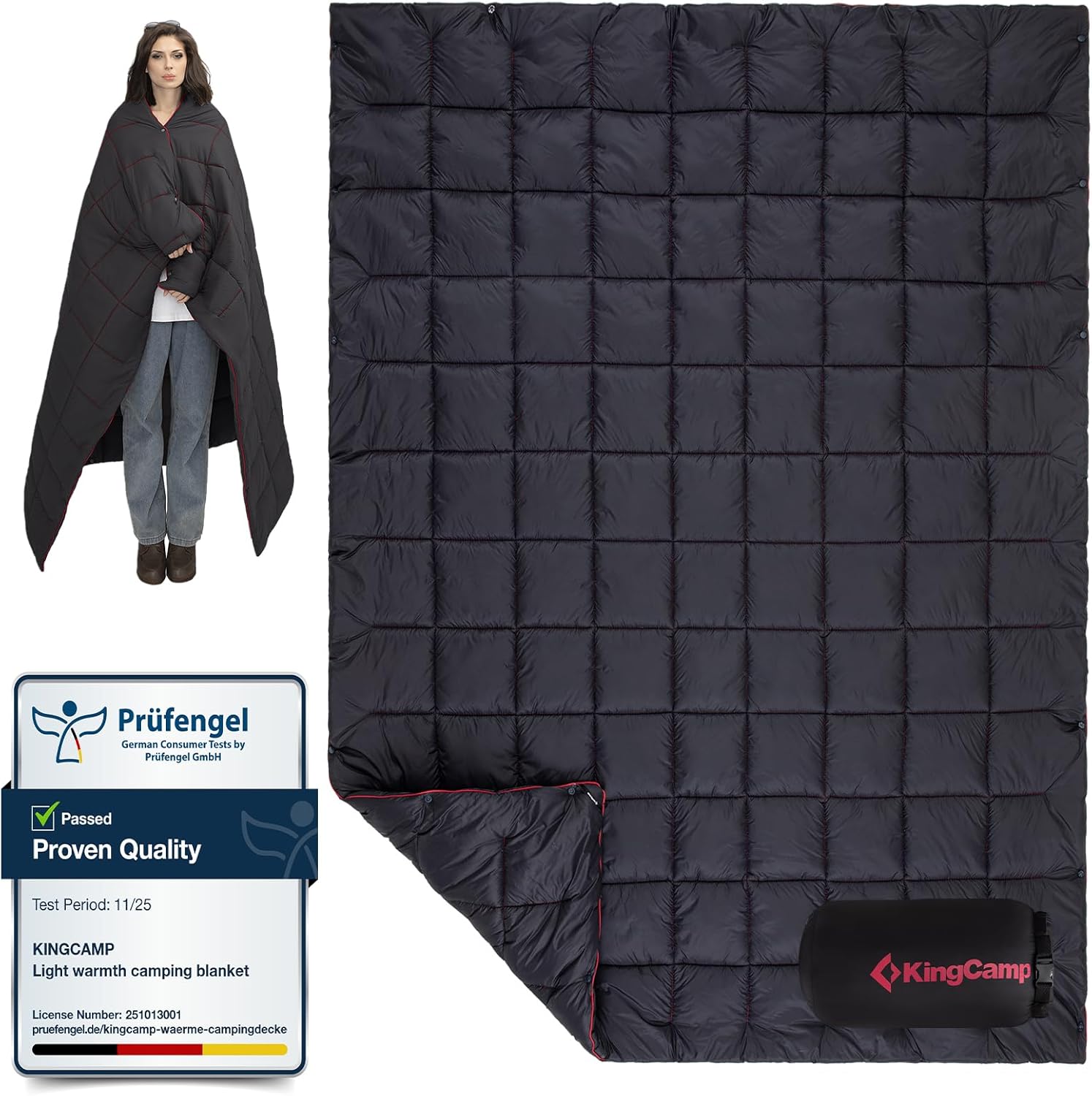
3. KingCamp Lightweight Multifunctional Camping Blanket – £38.99
Now we're moving into the realm of proper, all-round camping blankets. KingCamp often delivers solid gear at a reasonable price, and this blanket is a great example of a versatile synthetic option.
- What it is: A lightweight, multifunctional synthetic blanket designed for camping and travel. It usually features a durable outer shell and soft lining, with decent insulation for its weight.
- Campervan Pros:
- Excellent Value: For under £40, you’re getting a robust and functional blanket that can handle a lot.
- Multifunctional Design: KingCamp blankets often include snaps to wear as a poncho, or to create a footbox. This versatility is gold in a campervan.
- Good Warmth-to-Weight: It offers a decent amount of warmth for its relatively light weight, making it suitable for most UK spring, summer, and autumn evenings.
- Durable & Water-Resistant: Typically made with ripstop nylon and a DWR coating, it can handle light moisture and general wear.
- Machine Washable: Easy to keep clean, which is a massive bonus on the road.
- Campervan Cons:
- Packability: While good for a synthetic, it won't compress quite as small as a high-end down blanket. Still perfectly manageable for van life, though.
- Ultimate Warmth: While good, it might not be enough for deep winter nights without other layers.
- Verdict: This is a cracking all-rounder for the average UK campervan owner. It strikes an excellent balance between price, features, warmth, and durability. If you want one blanket that can do a bit of everything – wrap around you by the campfire, provide an extra layer on your bed, or even act as a makeshift poncho – this KingCamp is a very strong contender. It's a reliable workhorse that won't let you down.
4. Horizon Hound GR-20 Down Camping Blanket Review – £65
Stepping up into the down category, the Horizon Hound GR-20 offers that premium warmth-to-weight ratio that down is famous for, but at a relatively accessible price point.
- What it is: A compact, lightweight down-filled blanket, typically with a ripstop nylon shell and a DWR finish. It's designed to provide maximum warmth for minimal bulk and weight.
- Campervan Pros:
- Superior Warmth-to-Weight: This is where down truly shines. You get a serious amount of warmth from a surprisingly light and thin blanket.
- Exceptional Packability: It compresses down incredibly small, often into a tiny stuff sack. This is a huge advantage for space-starved campervans.
- Luxurious Feel: Down blankets have a wonderful loft and softness that synthetic blankets struggle to match.
- Good Value for Down: At £65, it’s one of the more affordable entry points into quality down blankets.
- DWR Coating: Provides some protection against light moisture.
- Campervan Cons:
- Vulnerability to Moisture: As with all down, if it gets properly wet, it loses its insulation and is a pain to dry. You need to be more careful with this one around damp environments or spills.
- Care Requirements: Washing a down blanket is more involved than a synthetic one.
- Price: While good for down, it's still a significant jump from synthetic options.
- Verdict: If you prioritise ultimate warmth and minimal packed size, and you're prepared to be a bit more careful with moisture, the Horizon Hound GR-20 is an excellent choice. It's perfect for those who want that premium feel and performance without going into the really high-end price bracket. It’s ideal for cold nights inside the van, or dry, chilly evenings outside. Just remember its Achilles' heel: water.
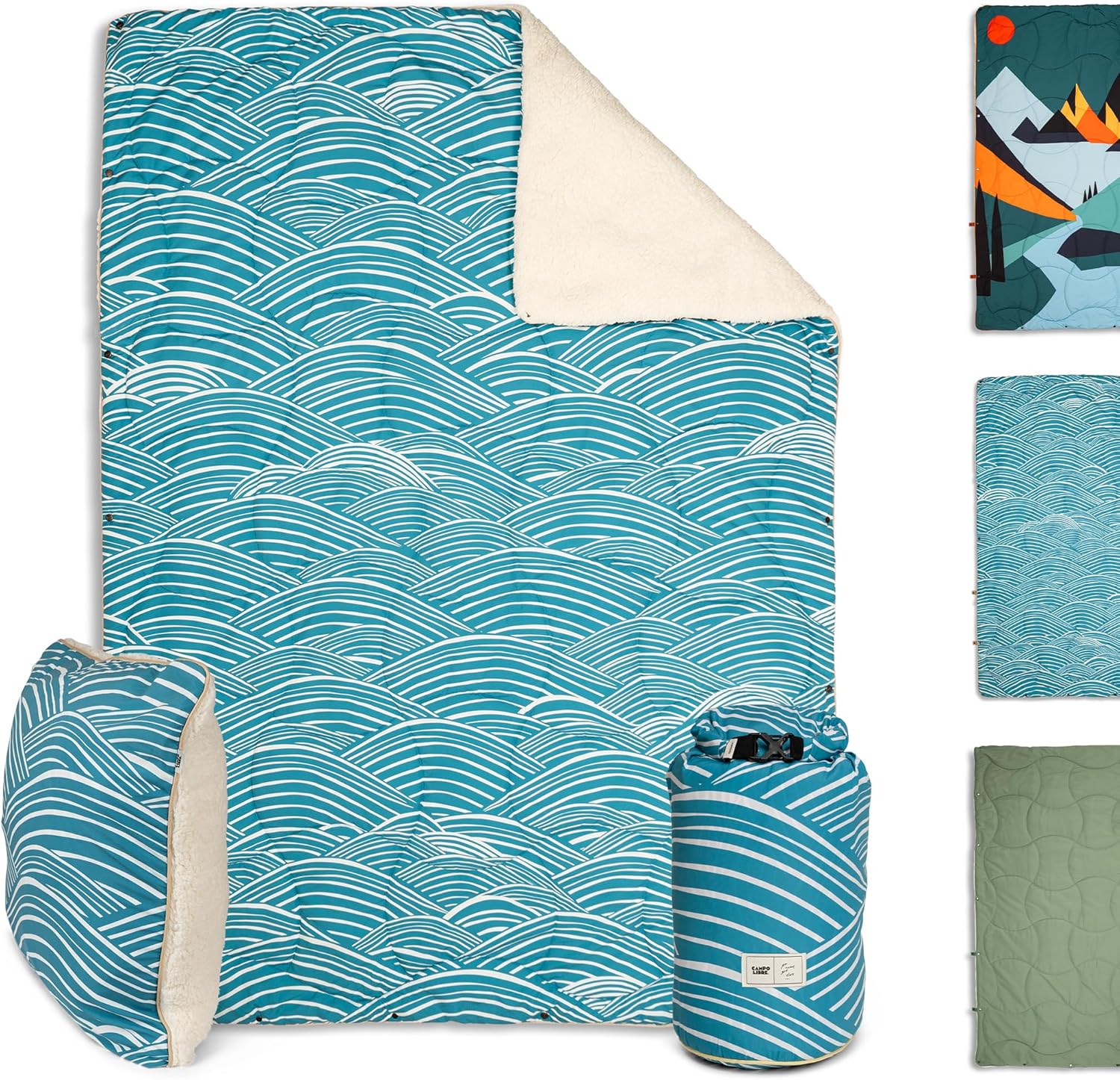
5. Campo Libre Wanda 4-in-1 Camping Blanket – £104.99
Now for the premium option, the Campo Libre Wanda. This blanket aims to be the ultimate versatile companion, justifying its higher price tag with advanced features and quality.
- What it is: A high-end synthetic camping blanket designed with maximum versatility in mind. It often features premium insulation, a robust shell, and clever design elements that allow it to function as a blanket, poncho, sleeping bag, and even a pillow.
- Campervan Pros:
- Unrivalled Versatility (4-in-1): This is its biggest selling point. The ability to transform from a blanket to a poncho, a footbox-equipped sleeping bag, or a pillow means it can genuinely replace multiple items. This is invaluable in a campervan.
- Premium Synthetic Insulation: Expect high-quality synthetic fill that offers excellent warmth-to-weight, good compressibility, and crucially, performs well even when damp.
- Robust & Durable: Made with high-denier ripstop fabric and a strong DWR coating, this blanket is built to last and withstand the rigours of outdoor life.
- Excellent Warmth: Designed for colder conditions, it will keep you properly warm through most UK seasons.
- Easy Care: Being synthetic, it’s typically machine washable and dries faster than down.
- Campervan Cons:
- Highest Price Point: At over a hundred quid, this is a significant investment. You really need to value its versatility and performance to justify the cost.
- Packed Size: While good for a synthetic, it won't be as tiny as the Horizon Hound down blanket.
- Verdict: The Campo Libre Wanda is for the campervan owner who wants the absolute best in synthetic versatility and performance, and is willing to pay for it. If you need one blanket that can literally do everything – keep you warm, allow you to move around hands-free, act as a primary sleep system, and withstand spills and damp – this is it. It’s an investment, but one that could significantly streamline your gear and enhance your comfort. If you can stretch the budget, you won't be disappointed.
Down vs. Synthetic: A Campervan Owner's Dilemma Revisited
We touched on this earlier, but it’s worth a deeper dive for UK campervan owners. Our climate is, let's be honest, often a bit damp. Rain is a frequent visitor, and even if it’s not raining, the air can feel heavy with moisture. This reality significantly impacts the down versus synthetic choice.
Down is king in dry, cold conditions. If you were planning a trip through the deserts of Arizona, I’d tell you to grab a down blanket without a second thought. It’s lighter, packs smaller, and offers superior warmth for its weight. But here in the UK, the risk of it getting damp – whether from condensation inside the van, a spilled brew, or just high humidity – is ever-present. Once down gets properly wet, it clumps, loses its loft, and becomes useless as an insulator. Drying it thoroughly in a small campervan can be a multi-day nightmare.
Synthetic insulation, on the other hand, is far more forgiving. It holds its structure and insulating properties even when damp, and it dries much, much faster. For a campervan blanket that will likely see use both inside and outside, on potentially damp ground, or around active kids and pets, this resilience is a huge advantage. You can spill your tea, drape it over a slightly dewy picnic bench, or even get caught in a light shower, and it will still provide warmth.
For most UK campervan owners, especially those who aren't chasing every gram of weight saving or every cubic inch of packed space, synthetic is often the more practical and sensible choice. You get excellent warmth, robust durability, and peace of mind knowing it can handle a bit of moisture without becoming a soggy, useless mess. Yes, it might be a touch bulkier, but the trade-off for reliability in our climate is usually worth it. If you're meticulous and confident you can keep your blanket bone dry, down is fantastic. But for the realities of UK campervan life, synthetic often wins the day.
Sizing It Up: What's Right for Your Van?
The size of your camping blanket directly impacts its versatility and comfort. Don’t just grab the first one you see; think about how you'll use it most.
- Single Throw (approx. 1.2m x 1.8m): This is ideal if you’re mostly looking for a personal wrap, a lap blanket, or an extra layer on a single bed. It’s super versatile for one person, easy to drape around shoulders, and less bulky when packed. Good for solo travellers or as a supplementary blanket.
- Larger/Double Quilt (approx. 2m x 2m or similar): This is where you get serious coverage. A larger blanket is perfect for snuggling up with a partner, fully wrapping yourself head-to-toe, or using as a primary top layer on a wider bed. It’s also brilliant as a picnic blanket for two or three people. The Campo Libre Wanda or a larger KingCamp would fall into this category. While it packs slightly larger, the extra coverage often makes it worth it.
My advice? For most campervan setups, a larger, more versatile blanket is generally better as your primary option. You can always fold it up if you only need partial coverage, but you can’t make a small blanket bigger. If space really is at an absolute premium, or you mostly travel solo, a single throw will do the job. But for proper comfort and sharing, go big.
Beyond the Blanket: Clever Uses in Your Campervan
A good camping blanket is a chameleon. It adapts to almost any situation, making it one of the most useful items you’ll carry in your van. Here are some ways I’ve seen them used, and some I’ve used myself:
- Extra Bedding: The most obvious, right? Drape it over your sleeping bag or duvet for an instant warmth boost on cold nights. It's much easier to add or remove than a full duvet.
- Cosy Campfire Companion: Wrap it around you while you’re outside, keeping the chill at bay as you watch the stars. Look for one with snaps to wear it like a poncho.
- Picnic Blanket: Lay it on the grass for an impromptu lunch stop. The DWR coating on many blankets means damp ground isn't an issue.
- Temporary Curtain/Divider: If you need a bit of privacy or want to block out light, a large blanket can be quickly hung up with clips.
- Pet Blanket: Give your furry friend a dedicated, comfortable spot on the floor or a seat. It's easier to wash than your upholstery!
- Seat Cover: Protect your seats from dirty clothes, wet swimsuits, or general wear and tear.
- Ground Cover for Van Repairs: If you need to crawl under the van, lay out your blanket to keep your clothes clean and provide a bit of padding.
- Emergency Warmth: Keep one easily accessible for unexpected cold snaps, breakdowns, or if someone in your party needs quick comfort.
- Kids' Play Mat: A clean, soft surface for the little ones to play on inside or outside the van.
- Cushion/Pillow: As seen with the Proglobe, many can be stuffed into their own bag to create a comfy pillow. Even without that feature, a rolled-up blanket makes a decent bolster.
The key here is versatility. Don't think of it as just a blanket. Think of it as a multi-tool for comfort and convenience in your compact living space.
Maintenance Matters: Keeping Your Blanket Fresh on the Road
Living in a campervan means things get dirty faster than at home. Mud, dust, spills, campfire smoke – your blanket will see it all. Proper care extends its life and keeps it hygienic.
- Shake it Out Regularly: Before packing it away or bringing it inside, give it a good shake to dislodge loose dirt, crumbs, and leaves.
- Spot Clean Small Spills: Don't wait for a full wash. Use a damp cloth and mild soap to tackle small stains immediately. The DWR coating helps here, often making liquids bead up for easy wiping.
- Machine Washing (Synthetic): Most synthetic blankets are machine washable. Use a gentle cycle with cold water and a mild detergent. Avoid fabric softeners, as they can reduce the effectiveness of DWR coatings and clog insulation fibres.
- Machine Washing (Down): This is trickier. You'll need a front-loading machine (top-loaders can damage down) and a specific down-friendly detergent (like Nikwax Down Wash Direct). Use a gentle cycle with extra rinse cycles to ensure all soap is removed.
- Drying (Synthetic): Tumble dry on a low heat setting, or hang it out to air dry. Synthetic blankets dry relatively quickly, which is a big plus when you're on the road.
- Drying (Down): This is the most critical step. Tumble dry on a very low heat with a few clean tennis balls or dryer balls. These help break up the down clumps and restore its loft. It will take several hours, and you’ll need to periodically remove it and manually fluff it to ensure even drying. Don't rush this, or your down will clump permanently.
- Storage: When not in use, store your blanket loosely in a breathable bag. Avoid compressing it for long periods, as this can damage the insulation's loft over time. The stuff sack is for travel, not long-term storage.
Keeping your blanket clean and well-maintained means it will perform better, last longer, and keep your campervan feeling fresh and inviting.
Budgeting for Warmth: What to Expect
Let's talk brass tacks. How much should you expect to spend on a decent camping blanket for your campervan?
- Entry-Level (Under £30): You'll find basic synthetic throws like the Proglobe or the ultra-minimal BEARZ. These are great for specific, limited uses (emergency, ground sheet, very light warmth) but aren't your primary comfort blanket.
- Mid-Range (£30-£70): This is where you get excellent value for synthetic blankets. The KingCamp is a prime example. You'll find durable, warm, and versatile options with good features and packability. This is the sweet spot for most UK campervan owners.
- Premium (£70+): Here you'll find higher-end synthetic blankets (like the Campo Libre Wanda) with advanced features and superior performance, or quality entry-level down blankets (like the Horizon Hound GR-20). These offer the best warmth-to-weight, most features, and highest durability, but come at a higher cost.
Consider your budget, but also consider how much you'll use the blanket and what you expect from it. A slightly higher investment upfront can save you money and discomfort in the long run. Don't be afraid to spend a bit more on a quality item that will genuinely enhance your campervan experience.
The CamperBrain Verdict: Our Final Thoughts
Choosing the right camping blanket for your UK campervan is about balancing warmth, packability, durability, and versatility against your budget and specific needs. It's not just about staying warm; it's about smart gear that makes van life easier and more comfortable.
If your budget is tight, or you need a highly specific, minimalist tool, the Proglobe Packable Camping Travel Blanket Pillow (£19.99) offers fantastic multi-use value as a lightweight blanket and pillow, while the BEARZ Outdoor Pocket Sized Travel Blanket (£21.99) is an unbeatable compact ground cover or emergency tarp. Just remember, neither of these is your primary warmth provider.
For the vast majority of UK campervan owners, the KingCamp Lightweight Multifunctional Camping Blanket (£38.99) is probably the best all-round choice. It hits that sweet spot of affordability, decent warmth, good durability, and excellent versatility thanks to its multifunctional design. It's robust enough for outdoor use, easy to clean, and provides reliable comfort in most conditions. This is the one I’d recommend for general use.
If you’re chasing ultimate warmth and minimal packed size, and you’re prepared to be careful with moisture, the Horizon Hound GR-20 Down Camping Blanket (£65) offers a superb down experience at a very competitive price. It feels luxurious and packs down tiny, making it brilliant for cold, dry nights.
However, if you want the absolute pinnacle of synthetic versatility and performance, and your budget allows, the Campo Libre Wanda 4-in-1 Camping Blanket (£104.99) is truly exceptional. Its ability to transform into a poncho or sleeping bag, combined with premium synthetic insulation that handles damp conditions, makes it a genuine game-changer for serious van lifers. It’s an investment, but one that will serve you brilliantly in almost any scenario.
Ultimately, don't skimp on your camping blanket. It's a small item that makes a huge difference to your comfort and enjoyment on the road. Pick one that suits your adventures, and you'll be toasty, happy, and ready for whatever the UK weather throws at you. Happy travels, and stay warm out there!