Campervan Gas Safe Certification Specialists
The UK's most comprehensive directory of campervan gas safe certification specialists. 108 verified companies, independently rated and reviewed.

Added byJoe Tannorella··
Reviewed and verified for accuracy
Find Your Perfect Converter
No obligation • Compare multiple quotes
Best Campervan Gas Safe Certification Specialists
Ranked by verified Google ratings and customer reviews. We track 108 companies offering campervan gas safe certification across the UK — here are the highest rated.

Bearwood Campers
Bespoke Campers


Big Blue Camper Co.


Born Wild Vans


Camper Conversion Specialists


Campervan Warehouse Ltd


CamperWorx Ltd


Coastal Campers


Country Road Campers


Custom Camper Solutions


Dubmotion Campers

Eternity Campers
Browse all 108 campervan gas safe certification specialists →
Key Facts About Campervan Gas Safe Certification
- ✓ A Gas Safe engineer performs a full system pressure test and inspects all pipework, joints, and appliances.
- ✓ Expect to pay £80–£150 for the inspection itself; any remedial work to fix faults discovered will cost extra.
- ✓ The on-site inspection is quick, typically taking one to two hours to complete for a standard van conversion.
- ✓ Professionals use a calibrated manometer to detect tiny, otherwise unnoticeable pressure drops that indicate a dangerous gas leak.
- ✓ Many UK insurers require a valid gas safety certificate to validate a policy, especially for self-build conversions.
- ✓ The issued document is often a Landlord's Gas Safety Record, the standard legal certificate for leisure accommodation vehicles.
- ✓ Certification confirms compliance with BS EN 1949, the specific safety standard for LPG systems in mobile environments.
Why Choose Professional Campervan Gas Safe Certification?
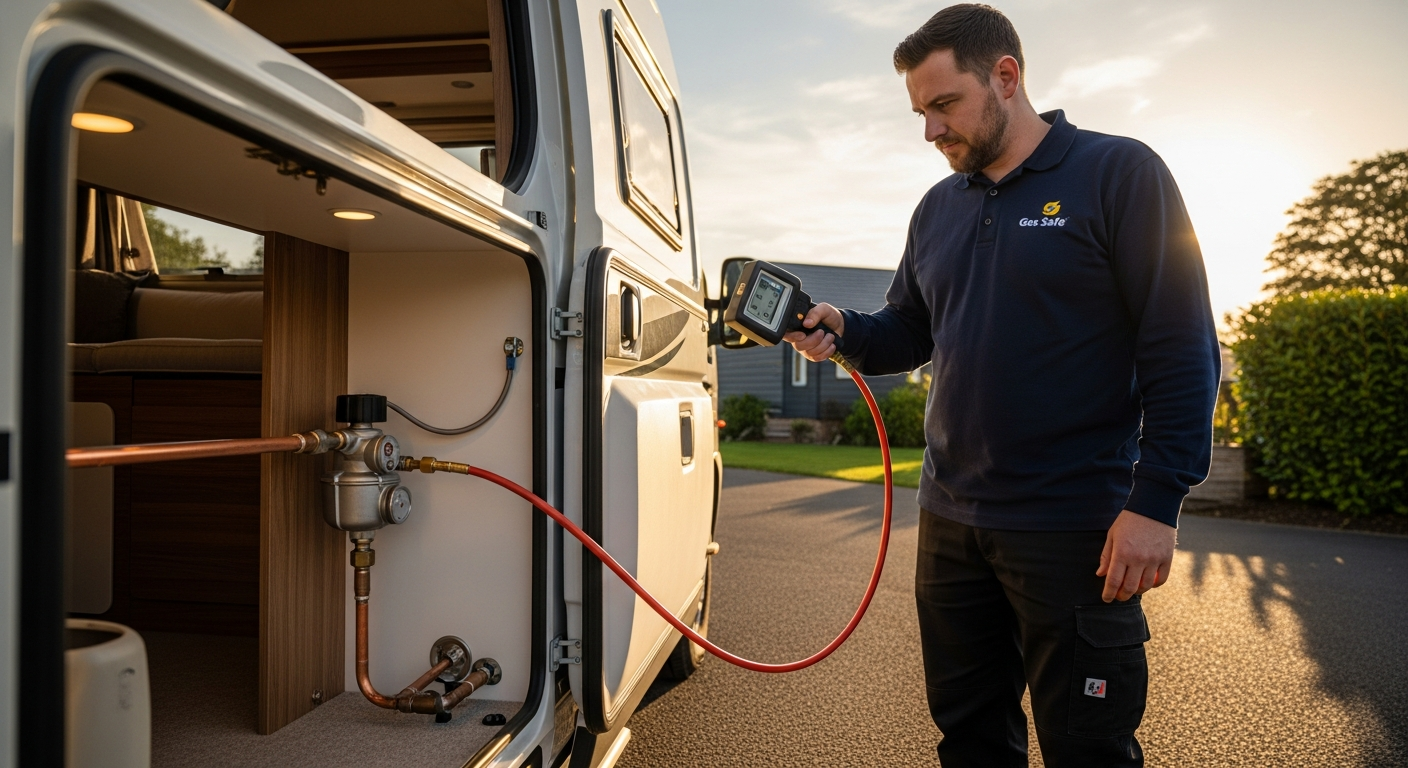
Attempting to get a gas system signed off without a professional is a serious gamble. DIY setups often fail due to tiny, undetectable leaks from improper pipe flares or mismatched compression fittings. A Gas Safe registered engineer does more than just look; they test. They use a manometer, a sensitive pressure gauge, to check the integrity of the entire system from the bottle to the appliance, holding it under pressure to expose any weakness. This process also verifies correct ventilation for your layout and ensures appliances like campervan water heaters are flued safely to the outside. This professional sign-off is often a non-negotiable requirement for insurance and many campsites.
When choosing an expert, look for specific qualifications. The engineer must be Gas Safe registered with the correct specialism for mobile units, typically "LPG LAV" (Leisure Accommodation Vehicles). Ask them directly which qualifications they hold and if they will perform both a full system pressure test and a tightness test. A quick visual check is a major red flag. A thorough inspection and certification should take one to two hours and typically costs between £90 and £200, depending on your system's complexity. A certificate issued without a rigorous, documented inspection is worthless if something goes wrong.
Finding the right person with these skills can be a challenge. CamperBrain streamlines this by connecting you with vetted specialists who focus on conversion projects. You can directly compare local engineers, read detailed reviews from other builders, and confirm they have the necessary LPG LAV credentials before you even make contact. This eliminates the uncertainty of calling general plumbers or garages who may lack the specific knowledge for leisure vehicles. This lets you book an expert who understands the unique fire & CO safety demands of a moving home, securing a certificate that validates your hard work.
Find Campervan Gas Safe Certification Specialists by Location
North West England
Yorkshire and the Humber
West Midlands
South East England
East Midlands
Frequently Asked Questions
What is Campervan Gas Safe Certification?
How much does Gas Safe Certification cost for a campervan?
How long does a campervan gas safety check take?
Can I do the gas safety check and certification myself?
What are the benefits of getting a Gas Safe Certificate?
How do I find a campervan gas certification specialist?
What should I look for in a Gas Safe certification provider?
Related Articles
Related Services
Expert Insights
"Skipping a Gas Safe certificate is a false economy. A professional LPG installation, typically costing £800–£2,500, guarantees correct pipework and ventilation, preventing the silent risk of carbon monoxide."
"Beyond safety, a Gas Safe certificate is crucial for insurance and resale. In practice, many major insurers will not cover a self-build conversion without it, directly impacting its market value."
"The most frequent DIY error is improper pipework. While flexible hose is fine for the final 300mm to an appliance, the main runs must be solid copper pipe secured every 500mm."
"Don't just hire any Gas Safe engineer. For most builders, the key is finding a specialist with the CCLP1 LAV qualification, as a domestic engineer's certification is not valid for vehicles."
Ready to Get Started with Campervan Gas Safe Certification?
Get free, no-obligation quotes from verified specialists. Compare prices and reviews to find the perfect match for your project.
Get Free Quotes